

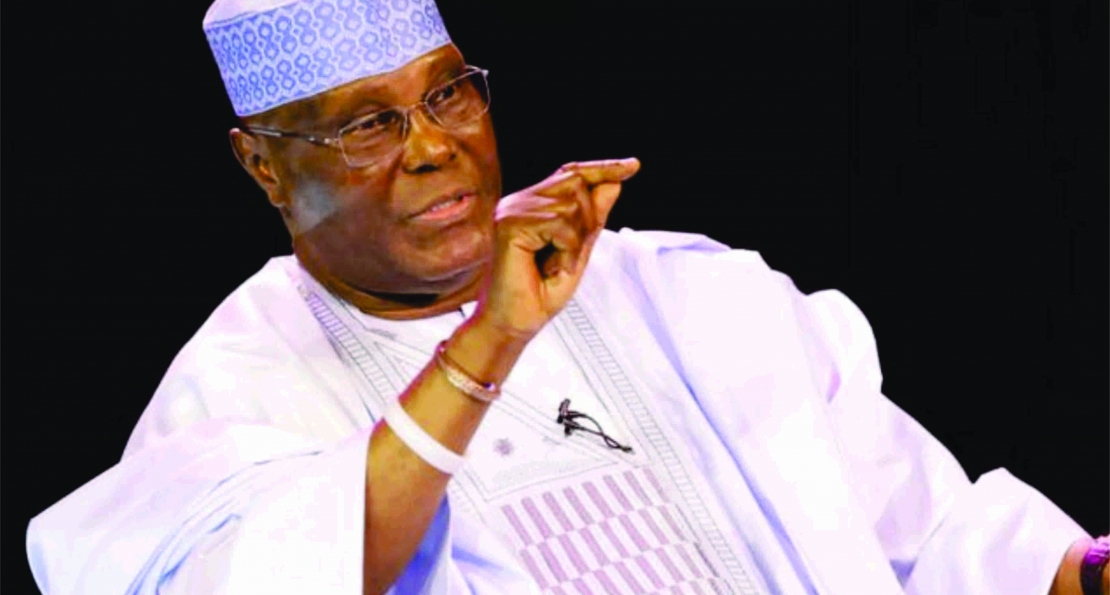
Former Vice President Atiku Abubakar has criticised the Federal High Court’s refusal to review the bail conditions imposed on former Kaduna State Governor, Mallam Nasir El-Rufai.
Atiku described the conditions as practically impossible to meet and a de facto denial of bail.
In a statement issued by his Senior Special Assistant on Public Communication, Phrank Shaibu, Atiku, while expressing deep concern over the matter, argued that excessively stringent bail terms undermine the constitutional right to liberty and the presumption of innocence.
While acknowledging the court’s discretionary power to set bail conditions, the 2027 African Democratic Congress (ADC’s) presidential candidate stressed that such discretion must be exercised judiciously.
“Conditions that are manifestly excessive, unreasonable, or impossible to fulfil defeat the very purpose of bail and amount to detention through procedural means,” Atiku said.
He highlighted the specific demands reportedly placed on El-Rufai — including the need for a serving Grade Level 17 federal civil servant as surety who also owns verifiable property in highbrow Abuja districts such as Maitama or Asokoro, along with other layered requirements.
“The law is settled that an accused person remains innocent until proven guilty. Bail exists to preserve that constitutional protection. It was never designed to become a sophisticated instrument for punishment before conviction,” Atiku stated, warning that the implications stretch beyond El-Rufai’s case.
“This is not merely about one individual. It is about the principles that underpin a democratic society governed by the rule of law. Today it is El-Rufai.
“Tomorrow it could be any citizen whose liberty depends not on the law but on whether he can satisfy conditions that few Nigerians can ever meet,” he noted.
The former Vice President urged the judiciary to ensure bail conditions are aimed at securing court attendance rather than guaranteeing continued incarceration.
He called on all institutions involved in justice administration to uphold fairness, proportionality, and respect for fundamental rights, cautioning against any perception that legal processes are being weaponised against political opponents.
