

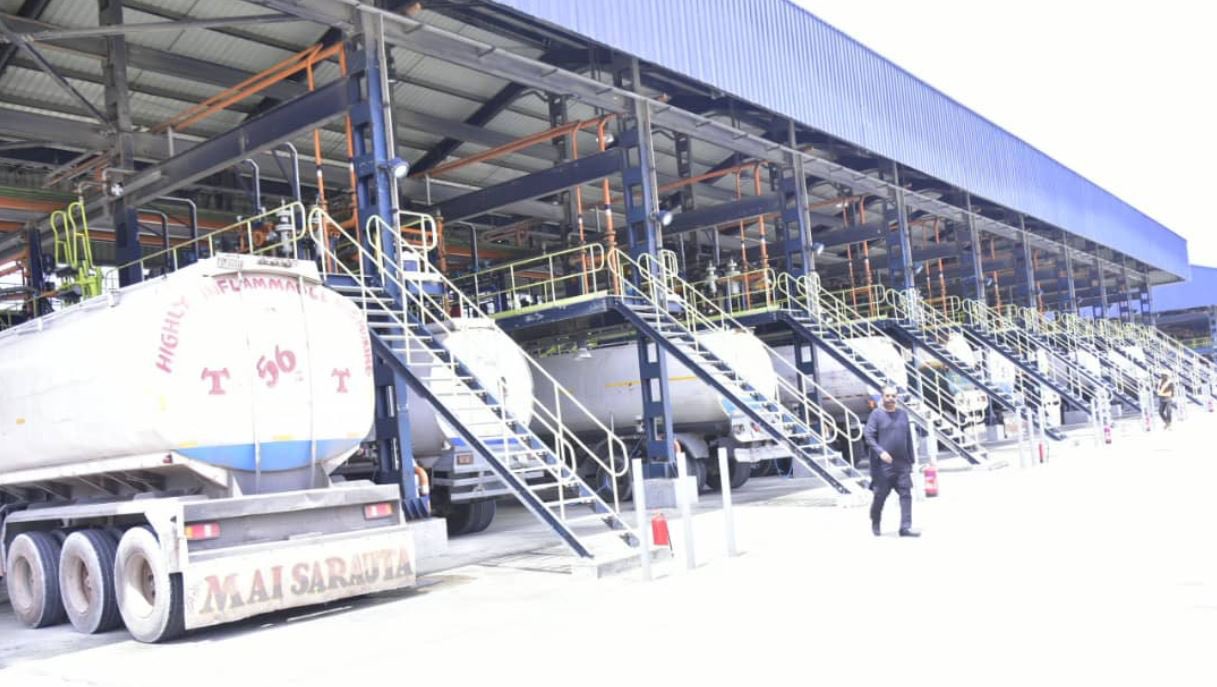
The cost of fuel in Nigeria is expected to drop following the decision by the Dangote Petroleum Refinery to slash the ex-depot price of Premium Motor Spirit (PMS), commonly known as petrol.
The refinery has reduced its gantry loading price by ₦50 per litre, adjusting the rate from ₦1,175 per litre down to ₦1,125 per litre.
A notice sent to customers and fuel marketers indicated that the coastal supply price has similarly been reduced, dropping from ₦1,495,215 per metric ton to ₦1,428,165 per metric ton.
The management of the refinery attributed this latest reduction directly to the easing of geopolitical tensions in the Middle East, a development that has subsequently led to a noticeable decrease in global energy prices.
Prior to this, international oil prices had surged dramatically due to direct hostilities involving the United States, Israel, and Iran, which severely threatened critical shipping lanes and forced the temporary closure of the Strait of Hormuz—a vital marine waterway that controls roughly one-fifth of the entire global oil supply.
Following the de-escalation of the conflict, global oil benchmarks have retreated sharply, falling back to levels last recorded before the outbreak of the US-Iran hostilities.
Recent market checks show that the international oil benchmark, Brent crude, has dropped down to $73.14 per barrel, while the United States variant, West Texas Intermediate (WTI), fell to $69.85 per barrel.
Before the conflict disrupted the global energy supply chains, a litre of petrol was sold at local retail stations across Nigeria for between ₦770 and ₦800.
