

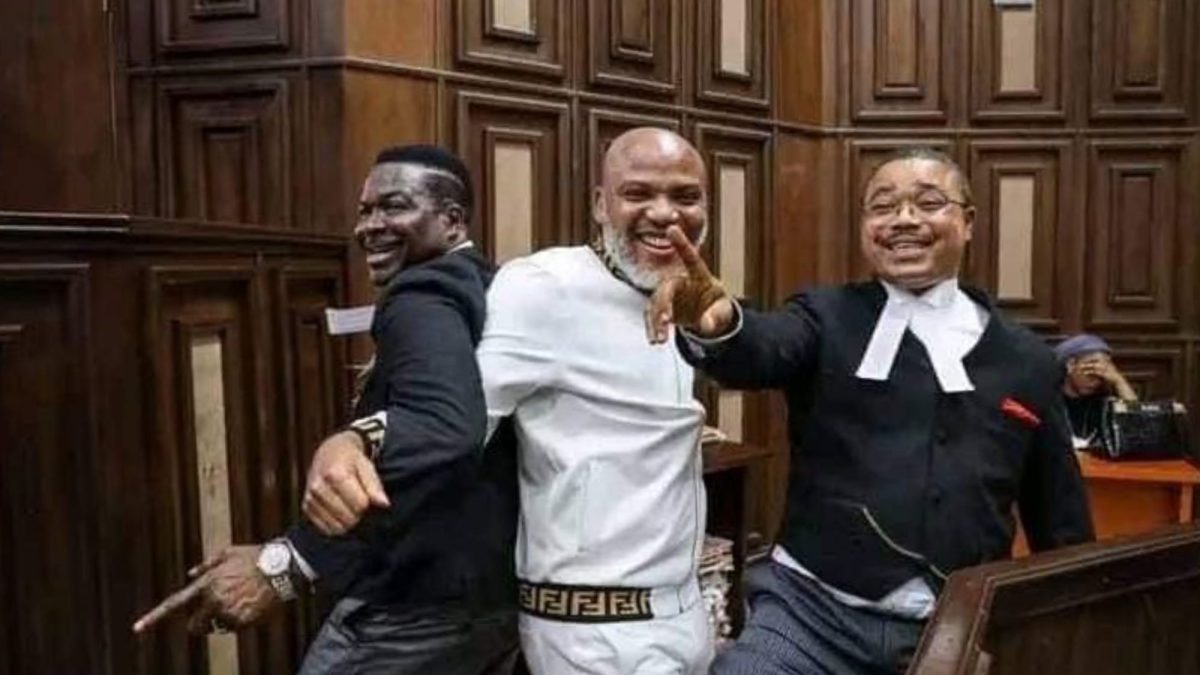
Legal practitioner Ifeanyi Ejiofor has spoken out following the decision by the detained leader of the Indigenous People of Biafra (IPOB), Nnamdi Kanu, to terminate his services as his personal lawyer.
According to the lawyer, he deliberately remained quiet for years despite facing repeated attacks, threats and allegations.
Ejiofor’s reaction came after Kanu, in a letter dated July 22, 2026, from the Sokoto Correctional Centre, formally ended his retainership and directed him to stop representing him, his family and IPOB in any capacity.
Kanu also warned the lawyer against making public comments about him or disclosing any confidential information obtained during their professional relationship, stating that any unauthorised disclosure could amount to professional misconduct and attract disciplinary action.
Responding in a statement posted on his official Facebook page on Monday, Ejiofor said he was surprised that there was now so much concern about his silence when he had consistently refused to respond to what he described as years of provocation.
According to him, he endured blackmail campaigns, petitions against him before professional bodies and defamatory allegations aimed at damaging both his reputation and legal practice. He further claimed that while Kanu was in detention, threats were made against him and some of the IPOB leader’s supporters were encouraged to attack his image.
Despite those developments, Ejiofor said he chose not to react publicly because he was guided by professional ethics and his responsibilities as a legal practitioner.
“The time has not yet come for me to disclose professionally obtained information. Even if I had intended to do so, I would have done it long before now,” he stated.
The former counsel insisted that his silence should never be mistaken for weakness, stressing that he had always respected the confidential nature of the lawyer-client relationship. He added that he had no intention of violating legal ethics or becoming responsible for the consequences of another person’s actions.
Ejiofor also declined to directly address what he described as documents that appeared to have been hastily prepared or possibly forged, an apparent reference to Kanu’s letter terminating his legal services.
He questioned why there was now a sudden emphasis on legal privilege after he had remained silent throughout years of alleged attacks, suggesting that the concerns may have arisen because certain information could eventually be presented in court as part of the defence in an ongoing defamation case involving another party.
According to Ejiofor, his decision not to speak publicly over the years was based on respect for the law rather than a lack of facts or evidence. He ended his statement with a warning that “time is fast running out,” indicating that although he had chosen to remain silent for now, that position might not remain the same indefinitely.
The latest exchange follows Kanu’s directive that Ejiofor should immediately stop acting on behalf of him, his family and IPOB. In the letter, Kanu stated that he had earlier informed the lawyer verbally that his services were no longer required and that the written communication was to officially confirm the decision.
The IPOB leader also withdrew every authority previously granted to Ejiofor, directing him to stop issuing statements, granting interviews, publishing press releases or making social media posts in the name of IPOB, himself or members of his family. He further instructed the lawyer to withdraw from any legal matter where he remained listed as counsel for him or the organisation.
The fallout comes weeks after another member of Kanu’s legal team, Christopher Chidera, disclosed that the IPOB leader decided to remove Ejiofor following disagreements over the handling of key legal issues. Chidera alleged that mistakes made by the former legal team prolonged Kanu’s detention and affected the progress of his case, while also claiming that the decision to disengage Ejiofor followed extensive concerns about the legal strategy adopted in the IPOB leader’s trial.
